


Anne Frank Lessons for Your Middle School Classroom
I don’t think anyone can forget reading Anne Frank for the first time. By middle school, students are familiar with WWII and the Holocaust, even if they don’t know the exact details. But they’re often taught about these events from a 3rd person perspective. Anne Frank changes that. This time, they’re reading a real story about a girl, around their age, who is living through the unthinkable. If you’ve been wanting to teach this text, but you’re not sure how to go beyond comprehension questions, I’m going to share how I set up my Anne Frank lessons. They will have your students evaluating, analyzing, and discussing.

About Anne Frank’s Diary
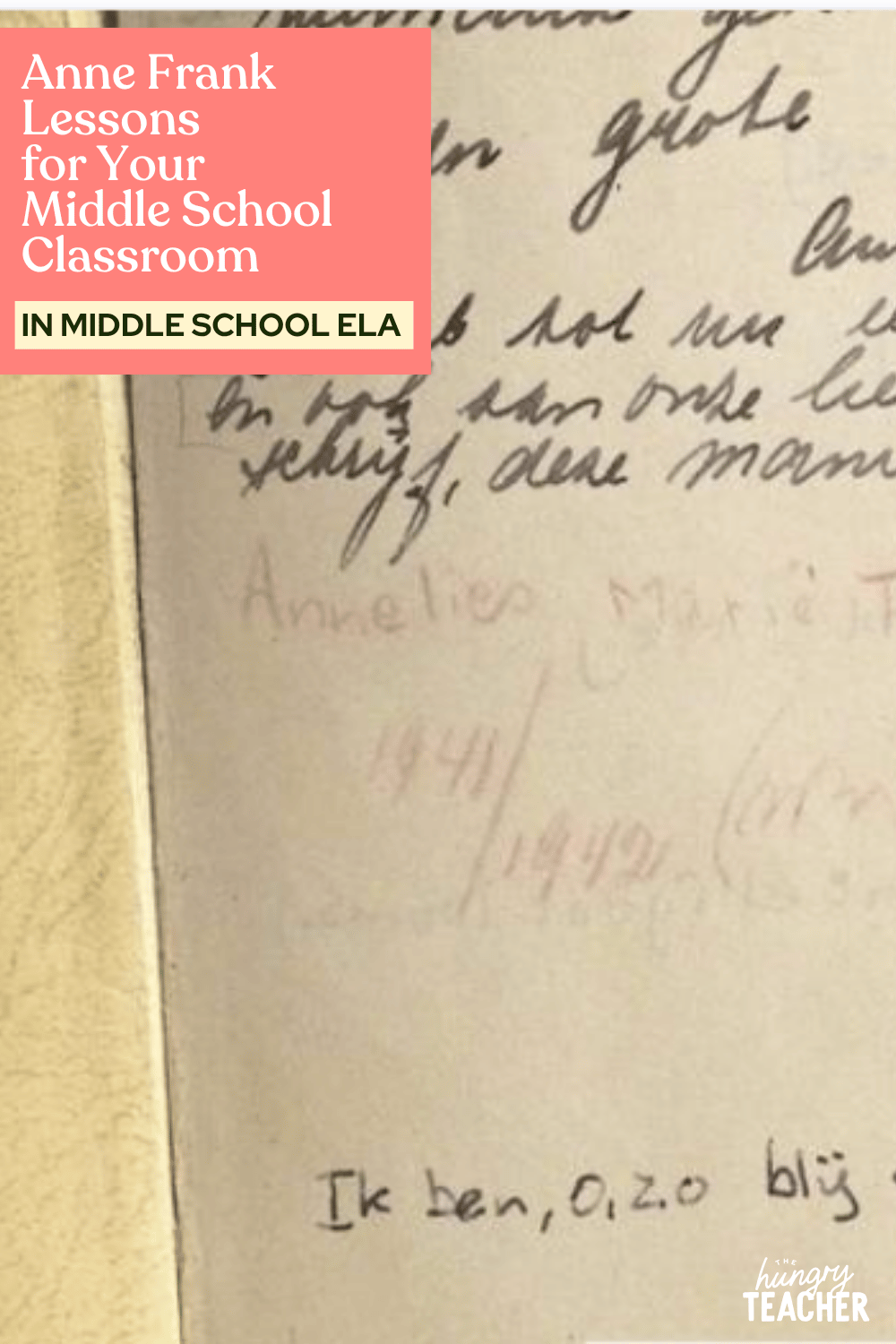
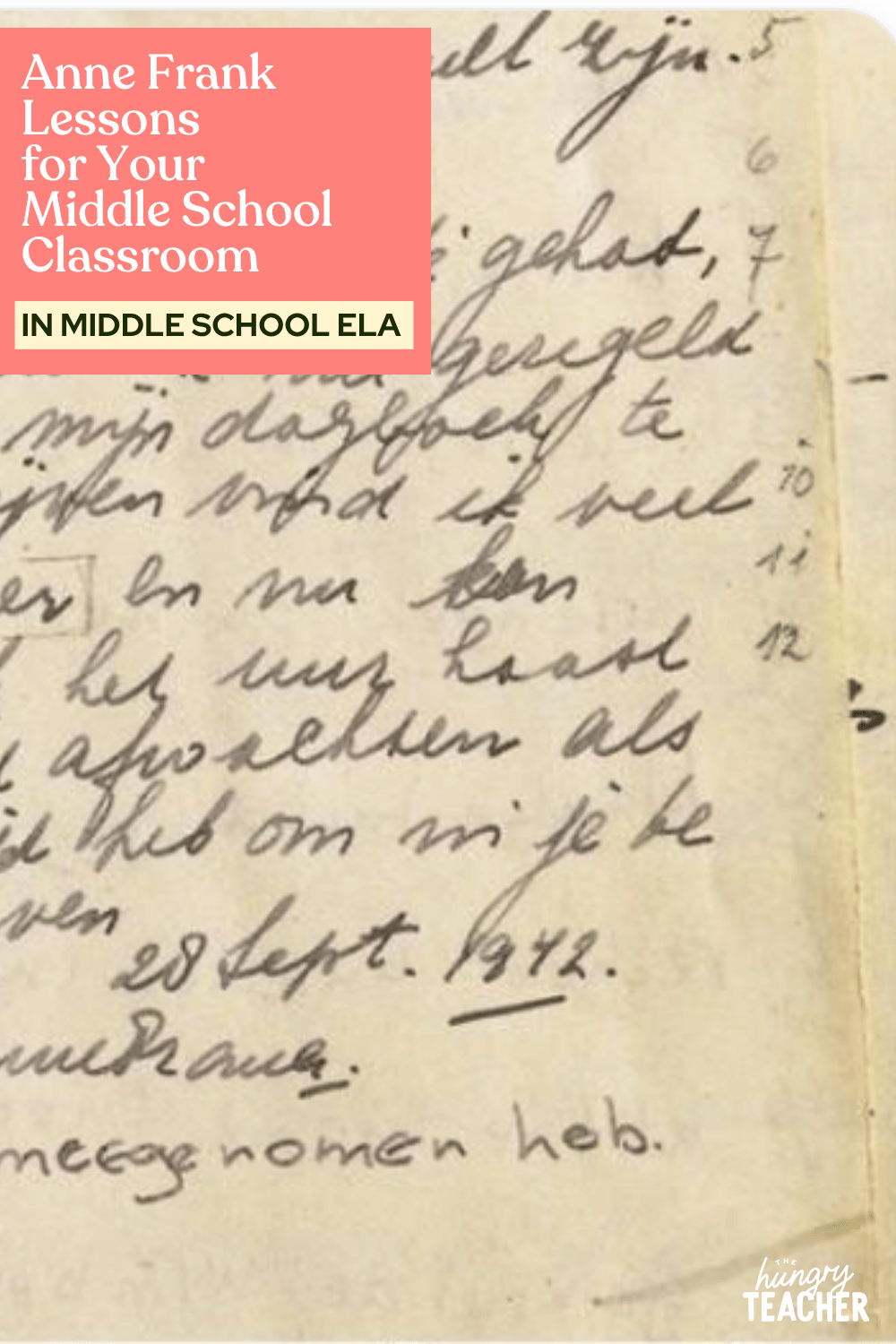
Anne Frank was a Jewish teenager living in Amsterdam when the Nazis invaded. Her family went into hiding to avoid the concentration camps. They stayed in hidden rooms behind her father’s business, along with four other people, for over two years. During this time, Anne wrote about her experience in a diary. She wrote about her fear that her family would be found, the boredom of staying hidden, and what it was like to live through the war.
That’s what I love about Anne Frank. Yes, Anne is a historical figure. But she was also a thirteen-year-old girl trying to live a normal life in extraordinary circumstances. It puts the Holocaust into a new perspective for middle schoolers.
Of course, the Holocaust is a horrible and heavy event. So it’s something you’ll need to prepare to talk about. Anne’s diary talks about concentration camps, raids, and shootings. But it’s not something Anne is seeing firsthand. Rather, she’s hearing about it in hiding, so you won’t find any graphic descriptions.
Planning Your Anne Frank Lessons
I’ll be honest with you, it’s easy to take Anne’s diary and pair it with some comprehension questions. It’s easy to find vocabulary lists and introduce new words. But at the end of the unit, what will students be getting out of it? Will their skills be any stronger?
I planned my Anne Frank lessons with something different in mind: discussion and analysis. Specifically: Socratic Seminars. Every single day, students read, write, and analyze through discussions. They are guiding the conversations (not you), and they are going beyond the words of the text. They’re looking for meaning.
When I planned my Anne Frank lessons, I did it across 19 lessons, plus a bonus lesson around the movie. Each lesson follows a similar format, with Socratic Seminar at the center of it all. Plus, they’ll work on a reading response for each lesson as well. It truly is a novel unit that hits all the nonfiction and major writing standards.
Using Socratic Seminar with Anne Frank
I can tell you how it’s done, but it’s better if I show you. My Anne Frank novel unit breaks each lesson down for you, day by day, following this format. And I also include a teacher’s guide to using Socratic Seminar, so whether you’re brand new or struggled with Seminars in the past, you can make them work in your classroom.
Let’s look at my Anne Frank lesson six as an example. This lesson focuses on evaluating arguments and claims. The lesson starts by sharing the guiding question: Anne feels like she needs to pack a suitcase in case they need to escape, but then her mother asks her, “Where will you escape to?” What does this reveal about the war and how much the Germans control?
Then, students read pages 76–89 of the book. As they read, they keep the guiding question in mind and focus on essential vocabulary words provided in the lesson plan. After they finish reading, students will complete a five-minute quick write answering the guiding question.
Now it’s time for the seminar! Students will circle up, and you’ll present the interpretive question: During World War II and the Holocaust, did children or adults have it harder? Why? Students will discuss in the Seminar, sharing their thoughts and supporting evidence from the text.
Lastly, students will head back to their notebooks for a reading response. Students will build on their previous quick write by incorporating new evidence and arguments from the Socratic Seminar.
If you’re tired of novel units that get stuck on the surface or book discussions that feel like you’re pulling teeth, try my Anne Frank lessons. They’re not being built around worksheets and comprehension questions. They center on Socratic Seminar to deepen students’ thinking as they analyze the text, use evidence to support their ideas, and engage with major nonfiction standards. The novel unit includes daily lesson plans, teaching slides, guiding and interpretive questions, digital notebooks, and so much more.


Want a sneak peek at teaching The Hungry Teacher way—with support, structure, and strategy?
When you join the waitlist for The Hungry Teacher’s Hub membership, you get three free classroom-ready resources: a theme unit, an expository writing unit, and a grammar unit introducing mentor sentences. Plus, you’ll get immediate access to a selection of exclusives from the Hub, including editable sub plans, pacing guides, and more.
No strings attached. Just resources you can use right now—and a heads-up when the Hub opens.
3 Free Middle School ELA Units—yours to keep!
JOIN THE WAITLIST + A FREE GIFT


